Think copper sinks are cool? Apparently a lot of other homeowners think so, too.
Copper sinks are all the rage in kitchens and baths as decor mavens look for something new beyond the stainless or porcelain sinks that dominate today's showrooms.
Why copper? For one, the dark patinas complement the trend toward oil rubbed bronze hardware and deeper, richer natural countertop stones such as granite.
Many homeowners are drawn to the variable shades of copper that seem in a day-to-day state of flux. Paul Sacco, owner of Copperhead Sinks in Dallas, calls the ever-changing hues of copper a "living finish" that evolves over time as the metal oxidates.
In fact, most copper sinks sold today are dark because the effort and elbow grease needed to keep copper shiny is more maintenance than many homeowners want to endure.
Sacco equates the rising popularity of copper to where stainless was 10 to 12 years ago as steel began a climb up the popularity charts.
"Pretty soon, you'll see a lot more darker finishes like copper on the market," said Sacco, who operates a sink shop in Mexico where more than 400 designs of copper bath, kitchen and vanity sinks are created. People have warmed to a rich Tuscan look that spills over into Mediterranean and Southwest influences as well, he said.
Sacco said copper is usually hammered, bent or pounded into shape by hand. The surface is rarely smooth, but that can be a plus. Unlike many sinks of other materials where a scratch or dent sticks out like a sore thumb, minor flaws or scrapes in copper quickly oxidize and blend in with the surrounding metal.
But copper has other innate qualities beyond beauty. The acids in copper make its surface naturally antibacterial. Harmful bacteria such as e-coli can't survive more than a few hours on untreated copper. The healthful advantage is lost, however, if homeowners unnecessarily seal the surface with lacquer or other commercial sealants.
Sacco said sales of copper sinks have gone from 40 percent to 60 percent per month as interior designers and home magazines tout the upside of copper in the home.
Article Source: David Bradley
Showing posts with label sinks. Show all posts
Showing posts with label sinks. Show all posts
Tuesday, November 07, 2006

Wednesday, November 01, 2006
Bathroom Maintenance
Toilets
Most toilets are made of vitreous china, although other materials are occasionally used. There are many different styles of toilets, the most common being the two-piece. This type of toilet has two separate components, the bowl and the tank. For the most part, these units are generally inexpensive and replacement parts readily available.
One piece toilets, or siphon action toilets, are usually somewhat expensive. When flushed, the entire bowl surface is covered with water, however a quiet and smooth operation is associated with these units.
Toilet Maintenance
- Check for any signs of leakage at the water supply, the tank connection, the bowl, and the toilet connection to the drain.
- Make sure the toilet is tightly secured to the floor.
- Inspect the flush mechanism for proper operation.
- Be sure the toilet is ade-quately caulked to the floor.
TIP: Your drain plunger can become a more effective tool by smearing a little petroleum jelly around the edge of the suction cup. The jelly will create a better seal between the drain and the cup.
Bathtubs
Bathtubs can be either built-in or free standing. Typically they are made of enameled cast iron or steel, fiberglass or plastic. Some of the problems as-sociated with bathtubs are leaking water supply or drain connections, corrosion, and chipping of the enamel finish.
One option for providing an old tub with a new look is reglazing. This is a relatively new process and the results do not appear to be long lasting. The advantage of reglazing is that it can be done in place and is much less expensive than replacing the fixture.
Another common source of leakage is the intersection where the tub meets the enclosure. The enclosure may be ceramic tile, plastic, or simulated marble. Modern, one-piece fiberglass or acrylic enclosures are also available.
If properly installed, all of these materials are acceptable. To avoid problems, it is critical to keep the area where the tub meets the enclosure well sealed! Loose ceramic tile at the tub rim may be a sign of water penetration.
Bathtub Maintenance
- Occasionally check the underside of the bathtub for any signs of leakage or wood decay.
- Periodically inspect the tub surround for any signs of failure (loose tile, etc.).
- Keep the intersection of the tub and surround well sealed.
Sinks & Faucets
Bathroom sinks can be made of stainless steel, enameled steel, cast iron, vitreous china, plastic, marble, simulated marble, or a variety of other materials. All of these sinks are fairly reliable and each have their strengths and weaknesses. Leakage is the most common deficiency found with a faucet.
Faucets come in a variety of styles and quality. Regardless of the style, leakage is the most common problem discovered.
The popular compression faucet uses a washer to turn off the water when the washer is compressed against a seat. If water leaks out of the faucet this is usually an indication of a deteriorated washer. If water leaks from the handles it usually indicates deteriorated packing. Both of these problems are considered minor and are inexpensive to repair.
Modern faucets use a valve, cartridge, or ball to direct the flow of water. These mixing valves allow the control of hot and cold water, and the volume of water with a single handle.
Sink& Faucet Maintenance
- Periodically inspect under the sink for signs of leakage from the water supply lines and the drain piping.
Ventilation
If a bathroom does not have an operable window an exhaust fan is usually required. Although fans are not required when a window is present, they are beneficial. It is unlikely that a person would open a window every time they took a shower.
Heavy concentrations of moisture in an unvented bathroom can lead to mildew damage on the walls and ceilings.
The exhaust from the fan should discharge to the exterior of the building to prevent excessive moisture build-up in the attic.
Flooring
- Check for loose, cracked or missing ceramic tile.
- Inspect for deteriorated or missing tile grout.
- Be sure the edges of resilient flooring are kept well sealed.
- Keep the joint between the tile and the tub/shower well sealed to prevent water damage to the subfloor.
Article Source: All Bay
Dos and Don'ts of Cleaning Your Stainless Steel Sink
- Do...It is best to rinse stainless sinks thoroughly after each use. Thorough rinsing can be done by running the water for a few minutes and rubbing the cleaned area with a sponge.
- Do...Avoid exposing stainless sink to strong chemicals, such as paint removers, oven cleaners, etc. If contact occurs, quickly flush the surface with water.
- Do...Run cold water when pouring boiling water into sinks to try to minimize temperature shock. With stainless it isn't as important to remember that compared to other materials though.
- Do...Towel dry after each use to prevent mineral deposits from building up on the surface of the sink (although with a good quality stainless sink you can buff it back to the original "new" finish even after many years of scale and mineral build-up.
- Do...Scour the sink once a week, being sure to rub in the direction of the satin finish lines (best not to purchase a "mirror" finish).
- Do...Remove nail polish with a non-acetone based nail polish remover and flush with water.
- Don't...Allow food or beverage residue, or metal canned products to remain on sink surface.
- Don't...Cut directly on sink surfaces.
- Don't...Set hot pans directly into sinks.
- Don't...Scour the sink across the satin finish lines. Scouring across the satin finish lines can damage the original sink finish.
- Don't...Allow liquid soap or other household cleansers to dry on the surface of the sink. Most brands contain chemical additives, which will affect the finish.
- Don't...Leave standing solutions of chlorine bleach and water in the sink for extended periods of time. Chlorides, which are found in most soaps, detergents, bleaches, and cleansers, are very aggressive to stainless steel. If left on the sink too long they can cause surface pitting.
- Don't...Use a steel wool pad to clean your sink. Steel wool pads have a tendency to break apart and small particles of steel can become embedded in the surface of the sink. The steel particles will rust and will give the appearance that the sink itself is rusting.
- Don't...Use rubber mats or dishpans in the sink to protect the finish. Leaving rubber mats or dishpans in the sink can lead to surface rust or possible pitting. However, if you do use mats or dishpans please remove them after each use.
- Don't...Leave wet sponges, cloths, or cleaning pads on the sink. This can lead to surface rust.
Article Source: Plumbing World
Thursday, October 26, 2006
Stainless Steel Bath Sinks
Stainless steel sinks are not just for the kitchen anymore.
Some renovators are using this cool gray metal to bring a rustic, industrial design to the bathroom.
Who's Buying Them?
The trend is catching on in urban areas, where loft buildings create the perfect backdrop for this industrial metal. Others want a unique, cutting edge look for a high end contemporary home.
How to Blend It
Put a stone texture solid surface countertop underneath as a way to add contrast between a natural look material and a shiny metal bowl.
Why Stainless?
Stainless steel is considered very durable and easy to maintain, features that make it easy to adapt to the kitchen and bathroom. "Stainless has been a versatile material -- it doesn't chip, it doesn't stain," said Bruce Keclik, director of product development for Just Manufacturing, a sink, faucet and accessories manufacturer in Franklin Park, IL.
The shiny metal also reflects light. Since there typically is lighting over the sink, the metal will add a subtle sparkle to the room when the lighting is on.
"It's a different look for people," Keclik said. "I think the colors have somewhat run their course in the home and people are looking for something different."
How to Design with Stainless?
Those who are considering stainless should realize that it is a unique look and one that fits a contemporary design. While it can be blended into more traditional designs, the look has the clean lines that characterize contemporary.
Begin by deciding just how much stainless you want. Consider:
- A countertop for one sink or two?
- An all stainless countertop and sink?
- A wood, stone, solid surface or laminate countertop with a stainless sink?
- A polished or brushed stainless sink? Or, a combination of the two?
- A his and her setting -- two separate single bowls placed in separate sections of the bathroom?
Other Tips
When using stainless for the counter and sink, make sure the two pieces are made of the same gauge of stainless steel. Otherwise, the sink and countertop may look different when placed next to each other, said Jim Brunetti, owner of Avenue Metal Manufacturing in Chicago, which makes custom sinks, countertops, walls and other products.
This design can be achieved by dropping a sink into a countertop opening or by having the two pieces welded together.
Article Source: Renovators Place
Thursday, October 12, 2006
Bathroom Cleaning Tips
Windows and Mirrors
In a 32 oz. spray bottle, add 1/3 cup white (clear) vinegar and 1/4 cup rubbing alcohol. If you absolutely must have another cleaner, add 1 tablespoon automatic dishwashing detergent.
Tubs and Shower Stalls
Alkaline deposits in the water cause those not so pretty spots on your glass doors and shower walls. Apply a car wax to the walls and doors, but not the floor or it gets real slick. Both fiberglass and glass are porous. The car wax seals those pores, which makes cleaning easier and keeps water spots away. Reapply twice yearly.
Squeegee or wipe down your shower after each use to further prevent buildup. If you're tired of fighting the soap scum buildup, switch to liquid soap, natural soap or Dove. It's the talc in most bar soaps that causes the buildup. Changing soap can eliminate the buildup. You still need to clean the shower once a week, but the job is easier.
Clean the showers once a week with an orange citrus based cleaner. Spray on and give it ten minutes to dissolve the dirt. Why do all that scrubbing when your product does it for you?
OK, so the soap scum refuses to budge and friends are coming for a visit. Use your orange based cleaner concentrated. Pour plenty on an old dishrag and wipe on the walls and doors. Use can use boiling hot white vinegar (wear gloves) but you must keep applying it as the white vinegar dries. It takes time to dissolve that buildup.
Patience now becomes a virtue. Wait and wait and wait some more. Go clean the rest of the house. If the cleaner starts dripping down the walls, wipe it back on. Check the walls with a fingernail. If the residue removes easily, round one is about over.
Use a white bristle pad to scrub. They look like fibers and are glued to a sponge. Use the white ones only. The colored scrubbers are coarser and do scratch. Test a spot to make sure it won't scratch the fiberglass. Dampen the pad, keeping it good and wet and gently scrub. This removes the soap buildup and most of the white mineral deposits on the glass doors. Nothing removes the etch marks themselves, but further damage is halted. Reapply the orange citrus cleaner if necessary.
Plastic shower curtains can be machine washed. Remove, spray with your diluted orange based cleaner and wait about 10 minutes. Wash with your rags and they come out quite clean. Air dry. If the curtain is long enough, cut off the seam at the bottom to prevent mildew buildup down there.
Toilets
Ring around your toilet? Again, alkaline deposits cause those nasty rings. Depending on the hardness of your water, pour one or two cups of white vinegar into the toilet once a month to eliminate the problem.
Toilet bowl rings - Here I take a deep breath and plead with you to follow these instructions. Repeat. Follow these instructions. Do not deviate or you will scratch the inside of your toilet bowl.
Turn off the water flow to the toilet and flush to remove the water. Saturate a couple of heavy duty paper towels with white vinegar or the Orange Citrus Cleaner. Place around the edges making sure all areas are covered. Keep the towels damp for several hours, even overnight, until the water spots start dissolving. Then scrub with a stiff nylon brush.
If the white vinegar does not dissolve the whole ring, go to a janitorial supply store or a hardware store and purchase a pumice stone and a stiff toothbrush. Dampen one end of the pumice stone and keep it wet.
Gently, very gently, rub the pumice stone across the lines. When enough pumice builds on the sides, switch to a stiff bristle brush to continue working. Rub gently until the deposit disappears. Pumice will scratch the toilet. Use it only one time and cautiously.
Sinks
Once a month, pour one cup of baking soda, followed by one cup of white vinegar down the drain. Wait an hour and flush with warm water. The combination fizzles away most of the buildup. Works for shower, tub and kitchen sink drains as well.
Faucets
Water deposits build up around faucets and drain areas. Use a paper towel soaked in white vinegar and place around the faucet. Plug the drain and pour 1/2 cup white vinegar in the sink and wait. It takes time for the white vinegar to dissolve the alkaline deposits. Scrub using a stiff bristled nylon toothbrush.
Do not use orange based or powdered cleansers on brass or gold plated faucets. These fixtures corrode and scratch quickly. Dry these faucets after each use to prevent water spot damage.
Mildew
Keep ahead of mildew so it doesn't become a problem. Every six months spray your bathroom ceiling with a 50/50 solution of hydrogen peroxide and water. Peroxide is a safe bleach and won't harm the environment or your lungs. Find larger quantities of peroxide at beauty or medical supply stores.
Spray the mixture on and leave it. No need to rinse or scrub. If you currently have mildew, follow the above directions. Wait two hours and respray. Then wait 24 hours and spray a third time if necessary.
Article Source: Doityourself.com
Wednesday, October 11, 2006
Clogged Drains?
Ever suffer from a backed up kitchen or bathroom drain? Of course you have -- and you know what a mess it can be to clean them out.
You may be able to avoid some future clogs may if you follow a few tips from the American Society of Home Inspectors.
For the pipes and plumbing itself, ASHI recommends homeowners do the following:
These few tips may save you the trouble and expense of calling a pro when you get in a jam.
Article Source: Oldhouseweb
You may be able to avoid some future clogs may if you follow a few tips from the American Society of Home Inspectors.
- Pour a pot of boiling water down the drains every month and a pot of hot water plus a half-cup of baking soda down the garbage disposal to help prevent clogging. Also, keep pop-up sink drains and strainers clean and free of debris.
- Keep fat, grease and coffee grounds out of drains and dishwashers.
- Never pour paint or chemicals down drains. They can cause damage to pipes or interfere with the proper functioning of the septic system.
For the pipes and plumbing itself, ASHI recommends homeowners do the following:
- Check all fixtures -- tubs, shower stalls, sinks, basins and toilets. Make sure they are free of cracks, rust and other forms of surface damage.
- Remain aware of pipes that have been patched. Those should be replaced as soon as possible, since patches are meant to be temporary and may not hold out over time.
These few tips may save you the trouble and expense of calling a pro when you get in a jam.
Article Source: Oldhouseweb
Friday, October 06, 2006
Benefits of Stainless Sink
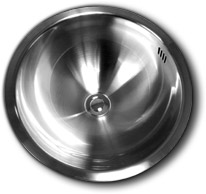
Stainless steel has emerged as the most popular choice of materials for new sink installations because of its low cost, light weight, and almost unbreakable construction. Stainless steel sinks are made in many sizes and several thicknesses, measured in gauge.
The gauge of the stainless steel is the thickness of the stainless steel sink. The most common gauges are 18 and 20. The higher the number gauge, the thinner the steel. Eighteen is the most recommended gauge for sinks.
Stainless steel kitchen sinks are easy to clean and will stay looking newer for longer when cared for properly. You won’t have to worry about leaving lemons in the sink overnight or cranberry stains, but it can become dull and scratched. It is best to put a plastic or rubber mat in the sink to protect it from scratches. A mat will protect the shiny surface and keep it looking new longer.
When choosing a kitchen sink, there are many different decisions that need to be made. Even the simplest of sinks are available in different styles and colors. The first consideration is the size. Make sure that your sink fits.
Sinks are made with various qualities of stainless steel. Light-gauge stainless steel is more vulnerable to denting and scratching.
Stainless steel is also available in a mirrored finish, which gives it a shinier appearance. In brushed-stainless finishes, which is the latest trend, scratches are less visible.
Kitchen sinks come in one bowl, two bowl, or three bowl models. The bowls can be deep or shallow. Single bowl sinks are basic, and their depth can vary from 10” to 12”. Two and three bowl sinks allow for multi-tasking. For example, you can rinse or store dishes in the large bowl, and use the small bowl for a garbage disposal or to rinse vegetables.
Article Source: Jason Gluckman
Copper Facts
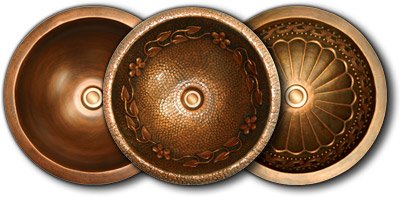
Copper is the most versatile and durable of all metals and has been called "man’s eternal metal". Copper is malleable, ductile and long lasting. Copper is a better conductor of heat and electricity than any other metal except silver. Without copper, there might never have been an electric light or space flight. This miraculous mineral and its alloys are at the heart of all technology, from telecommunications to transportation.
- Copper is everywhere – take a minute and look around you. It is in what you see and often in what you don’t see. It’s behind the walls of your
home, in electrical and telephone wiring. It’s in computers, refrigerators, microwaves and automobiles. - The average home today contains about 400 pounds of copper for electrical wiring, water pipes and appliances, while the automobile you drive
contains about 50 pounds. Each child born today in America will need 1500 pounds of copper in the course of his or her lifetime to enjoy our
current standard of living. - Did you know? – When zinc is alloyed with copper, brass is made. And when tin is alloyed with copper, bronze is made.
- Copper Fact – The Statue of Liberty contains 179,000 pounds of copper. After one hundred years of enduring biting sea winds, driving rains and the
beating sun, the copper skin of the Statue of Liberty not only has grown more beautiful, it has remained virtually intact. The weathering and
oxidation of the copper skin has amounted to just .005 of an inch in a century. - Did you know? – Today’s U.S. coins, dimes, quarters and half dollars have a solid copper core and an outer layer of a copper-nickel alloy.
- Copper’s Future – One of copper’s major advantages is that it is recyclable. In North America alone, approximately one half of the copper consumed
annually comes from recycled material. Copper’s recycle value is so great that premium-grade scrap has at least 95% of the value of primary copper
from newly mined ore.
Subscribe to:
Posts (Atom)